
Manomaya Kosha
Illuminating the Mind, Anchoring in the Now
Manomaya Kosha: Illuminating the Mind, Anchoring in the Now
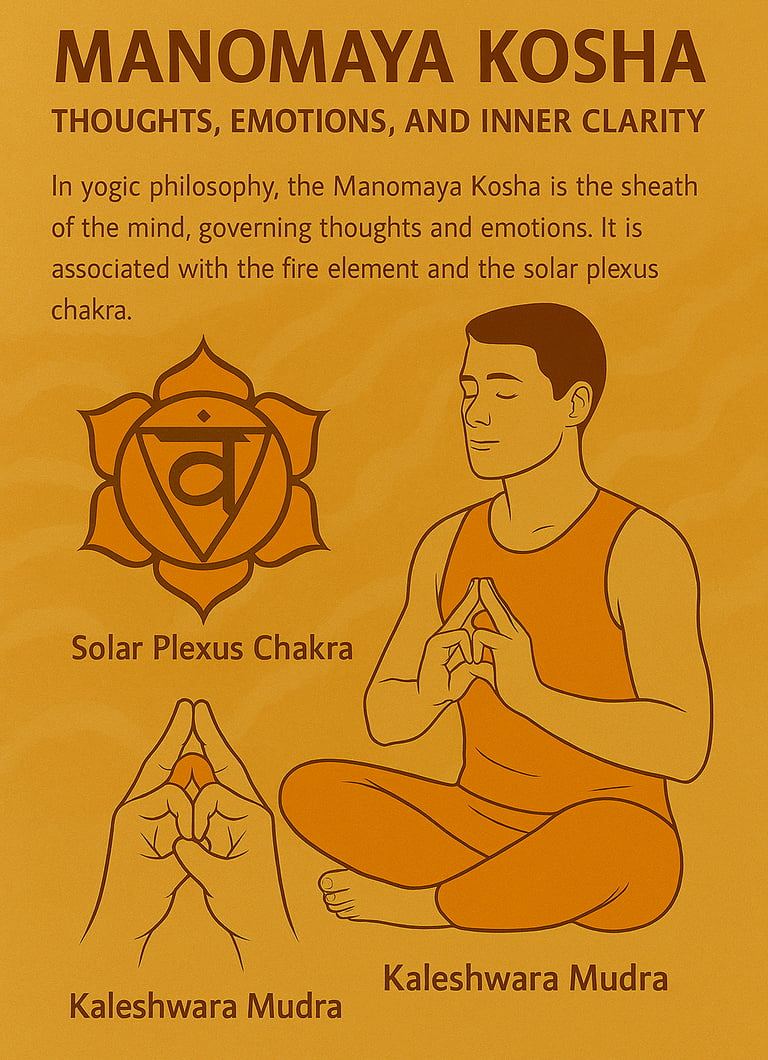
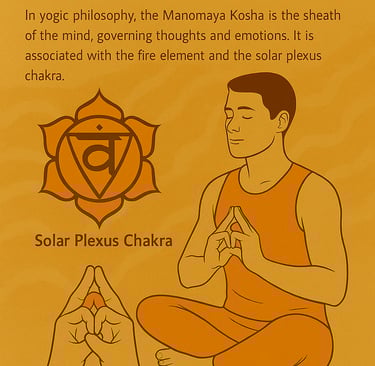
In the yogic framework of the five koshas, the Manomaya Kosha is the third sheath — the mental body. It governs our thoughts, emotions, memories, and sensory impressions. It is the seat of our inner dialogue, the stories we tell ourselves, and the lens through which we perceive the world.
This kosha is powerful, but also prone to turbulence. The mind often drifts into past regrets or future anxieties, rarely resting in the present moment. The Manomaya Kosha, when unbalanced, becomes a whirlpool of projections, distractions, and emotional reactivity.
To harmonize this layer, we must cultivate presence, clarity, and mental discipline — and yoga offers profound tools to do just that
Element & Chakra Association
Element: Fire (Agni)
The Manomaya Kosha is governed by the fire element, which represents transformation, clarity, and illumination. Fire burns away illusion and reveals truth. When the mental body is clear, we see things as they are, not as our fears or desires distort them.Chakra: Manipura Chakra (Solar Plexus)
Located in the upper abdomen, the Manipura Chakra is the center of willpower, confidence, and mental clarity. It is the energetic seat of personal power and discernment. When this chakra is balanced, we feel focused, decisive, and emotionally resilient.
The Nature of the Mind: Lost in Time
The mind is rarely still. It jumps from past to future, replaying memories or imagining outcomes. This constant movement creates:
Anxiety
Overthinking
Emotional exhaustion
Disconnection from the present moment
The Manomaya Kosha thrives when we anchor the mind in the now. This is where yoga becomes a sanctuary — not just for the body, but for the mind.
Mind-Focused Asanas to Balance Manomaya Kosha
Certain yoga postures help bring the mind into the present by demanding focus, breath awareness, and internal stillness.
1. Natarajasana (Dancer’s Pose)
Requires balance, concentration, and grace. It draws the mind into the body and cultivates mental poise.
2. Garudasana (Eagle Pose)
Twists and binds the limbs, forcing the mind to stay alert and centered.
3. Ardha Matsyendrasana (Half Lord of the Fishes Pose)
Stimulates the solar plexus and digestive fire, helping release emotional stagnation and mental clutter.
4. Trataka (Candle Gazing Meditation)
Though not an asana, this practice involves gazing at a flame to still the mind and sharpen focus — a direct way to balance the fire element and mental sheath.
These practices help us train the mind to stay present, to observe without judgment, and to respond rather than react.
Kaleshwara Mudra: Invoking the Goddess of Time
To deepen our connection with the present, we turn to Kaleshwara Mudra — a sacred hand gesture dedicated to Kaleshwari, the goddess of time.
How to Practice Kaleshwara Mudra
Touch the tips of the middle fingers together
Join the thumbs and index fingers to form a heart-like shape
Curl the remaining fingers inward
Rest the mudra at the heart center
Breathe slowly and observe your thoughts
This mudra:
Helps release repetitive thought patterns
Invokes clarity and presence
Symbolizes the flow of time and our ability to step out of its grip
Honors the divine feminine energy of transformation and awareness
By practicing Kaleshwara Mudra, we invite the goddess of time to help us step out of past and future, and into the sacred now.
Closing Reflection
The Manomaya Kosha is like a flame — it can illuminate or consume.
When we align it with the fire element and the Manipura Chakra, we awaken clarity, courage, and presence.
Through focused asanas and sacred mudras, we train the mind to rest in the moment — where life truly unfolds.
Let your thoughts settle.
Let your inner fire guide you.
Let the goddess of time hold you in the now.