
Pranamaya Kosha: Flow, Breath, and the Vital Energy Within
Blog post description.
Pranamaya Kosha: Flow, Breath, and the Vital Energy Within
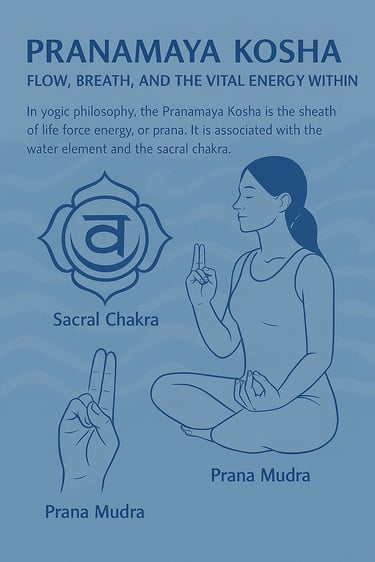
In the yogic understanding of the self, the Pranamaya Kosha is the second sheath — the energetic layer that animates the physical body. While the Annamaya Kosha is nourished by food, the Pranamaya Kosha is nourished by prana, the life force that flows through every breath, emotion, and movement.
This kosha governs the circulation of pranic energy through the nadis (energy channels), influencing vitality, emotional balance, and overall wellbeing. When prana flows freely, we feel alive, fluid, and connected. When it stagnates, we experience fatigue, emotional heaviness, or restlessness.
Element & Chakra Association
Water Element (Apas)
The Pranamaya Kosha is deeply connected to the water element, symbolizing:
Flow
Emotional expression
Adaptability
Sensitivity
Nourishment
Just as water moves, cleanses, and sustains life, prana flows through the body to energize and harmonize.
Sacral Chakra (Swadhisthana)
This kosha is also linked to the Swadhisthana Chakra, located in the lower abdomen. This chakra governs:
Creativity
Emotional fluidity
Sensuality
Pleasure
Inner rhythm
When prana flows smoothly through this chakra, we feel inspired, emotionally balanced, and connected to our inner waters.
The Role of Pranamaya Kosha in Energy Flow
This kosha is responsible for:
The movement of pranic energy
Regulating the five vayus (vital airs)
Supporting emotional balance
Channeling energy through the 72,000 nadis
Harmonizing the physical and mental bodies
It is the energetic blueprint that shapes how we feel, respond, and move through life.
Practices to Enhance the Pranamaya Kosha
1. Dirgha Pranayama (Three-Part Breath)
A gentle, expansive breath that fills the:
Belly
Rib cage
Upper chest
This breath:
Calms the nervous system
Enhances oxygen flow
Clears energetic blockages
Supports emotional release
Prepares the body for deep rest
Practicing Dirgha Pranayama before sleep is especially powerful. It slows the mind,soothes the emotional body, and allows prana to flow smoothly through the night.
2. Prana Mudra (Mudra of Life Force)
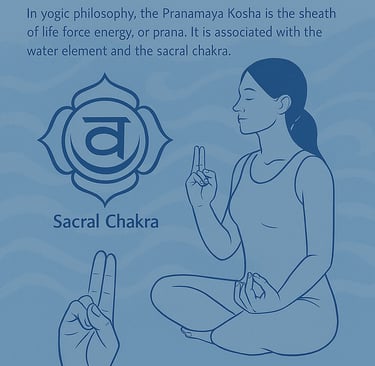
The Prana Mudra is formed by touching the ring finger and little finger to the thumb, while the index and middle fingers remain extended.
This mudra is known for:
Activating dormant energy
Improving blood circulation
Enhancing vitality
Strengthening the immune system
Supporting the flow of pranic energy through the nadis
Balancing the water element in the body
Practicing Prana Mudra for 10–15 minutes daily, especially after pranayama or before sleep, amplifies the effects of breathwork and nourishes the Pranamaya Kosha deeply.
Closing Reflection
The Pranamaya Kosha is the river of life flowing within you.
When you breathe consciously, when you hold a mudra with intention, when you allow your inner waters to move freely — you awaken your vitality.
Dirgha Pranayama and Prana Mudra are simple yet profound tools. They invite you to slow down, tune in, and reconnect with the subtle currents of energy that sustain your body and spirit.
Let your breath flow.
Let your energy move.
Let your inner waters guide you home.